
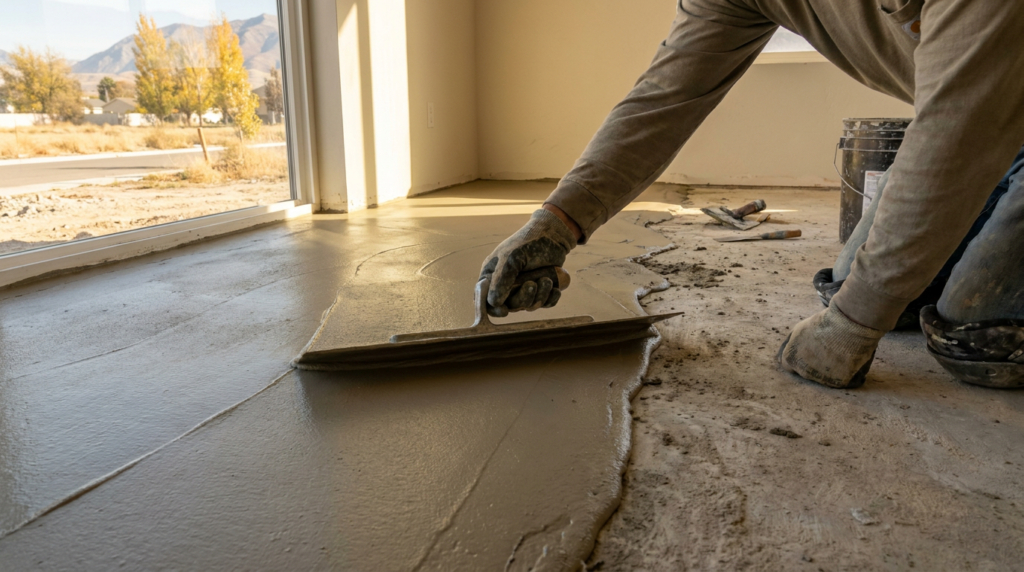
Concrete overlay supplies can cost-effectively restore worn or outdated concrete without removing and replacing the entire slab. But for contractors, the real question is not simply, How much does a bag of overlay cost?
What matters is the total material cost for the system and how much area those materials will cover.
Your final cost can vary based on the overlay system, surface condition, required thickness, repairs, primer, color, sealer, and application method. A thin microcement finish, for example, has very different material requirements than a thicker stamped overlay or repair system.
Here’s what contractors should consider when estimating concrete overlay supply costs.
What Determines the Cost of Concrete Overlay Supplies?
There is no single price that applies to every overlay project. Several factors affect your material budget.
Type of Concrete Overlay
The first consideration is the system you are installing.
Contec Supply carries overlay products for applications ranging from thin decorative finishes to heavier resurfacing and repair work.
Common options include:
- Microcement and microtoppings
- Trowel and spray overlays
- Stamped overlays
- Self-leveling products
- Concrete patch and repair materials
- Vertical overlays
- Decorative resurfacing systems
A thin overlay generally uses less material per square foot than a thicker system. But material usage is only part of the equation. Application requirements and supporting products also affect total job cost.
Coverage Per Bag
For contractors, coverage is one of the most useful numbers when comparing overlay costs.
Consider SureCrete MicroTek. A 40-pound bag has published coverage of approximately 200 to 300 square feet, depending on application conditions and technique.
MicroTek is a thin, self-bonding cement-based microcement designed to create smooth finishes on properly prepared surfaces. It is available with gray or white cement bases and can accept color packs.
That makes the calculation relatively straightforward:
Required project area ÷ expected coverage per bag = estimated number of bags
Always allow for actual jobsite conditions, application thickness, waste, texture, and additional coats when determining how much material to order.

Overlay Thickness Can Dramatically Change Material Usage
One of the biggest mistakes when estimating overlay supplies is looking only at the project’s square footage.
Thickness matters.
For example, published coverage information for professional overlay products demonstrates how quickly coverage changes as thickness increases.
A 50-pound Stamp Mix bag covers approximately:
- 24 sq. ft. at 1/4 inch
- 16 sq. ft. at 3/8 inch
- 12 sq. ft. at 1/2 inch
A 50-pound Smooth Coat bag covers approximately:
- 48 sq. ft. at 1/8 inch
- 36 sq. ft. at 3/16 inch
- 24 sq. ft. at 1/4 inch
The lesson is simple: do not estimate overlay material from square footage alone.
A thicker specification can require substantially more material for the exact same floor, patio, walkway, or other surface.
Surface Preparation and Repairs
The condition of the existing substrate also affects your supply cost.
Before installing an overlay, contractors may need products for:
- Crack repair
- Spalling repair
- Patching
- Cleaning
- Surface preparation
- Bonding
- Waterproofing or crack suppression
A relatively sound slab may require fewer supporting materials. A deteriorated surface with cracks, spalling, coatings, or other problems can require considerably more preparation before the decorative overlay is installed.
For example, CPR Concrete Patch & Repair is designed for repairs from 1/8 inch to 2 inches and can be used for applications such as spalling, curbing, foundation repair, and loading docks.
These materials need to be included when estimating the complete system rather than treating the overlay bag as the project’s only material expense.
Primer and Bonding Products
Not every system has the same bonding requirements.
Some products are self-bonding under the appropriate conditions, while other projects may require a dedicated primer or bonding product.
Primer 100, for example, is designed to bond overlay materials to challenging substrates such as painted, sealed, glazed, or damp surfaces. Contec Supply lists approximate coverage of 700 square feet for a 5-gallon pail and approximately 150 square feet for a 1-gallon container.
Knowing the substrate before ordering helps prevent both unnecessary purchases and missing material once the crew is on site.
Color and Decorative Finish
The desired finish can add materials beyond the base overlay.
Depending on the system and specification, that might include:
- Integral color packs
- Concrete stains
- Decorative coloring products
- Texture materials
- Specialty finishing products
For example, Durável Overlay Color Packs contain pre-measured iron oxide pigments designed to provide consistent coloring when mixed into compatible Durável overlay products.
For contractors, consistent color can be especially important on larger projects where multiple batches need to maintain a uniform appearance.
Sealer or Protective Topcoat
The overlay itself may not be the final material in the system.
Many decorative applications also require an appropriate sealer or protective coating. That means the project’s supply budget should account for both the overlay and the finishing system specified for the surface.
Coverage rates matter here too.
For example, Contec Supply lists SureCrete Super WB Acrylic Sealer at approximately 180 to 200 square feet per gallon, per coat, although actual coverage varies by substrate.
If multiple coats are required, calculate the material accordingly.
How to Estimate Concrete Overlay Supply Costs
A better estimate starts with the complete system.
Start by measuring the total square footage that will receive the overlay. Then inspect the substrate for cracks, spalling, uneven areas, previous coatings, moisture concerns, and other conditions that may require preparation or repair.
Choose the overlay based on the desired finish, location, traffic, substrate, and required thickness. Use the manufacturer’s published coverage at the planned application thickness instead of relying on a generic square-foot estimate.
Next, account for supporting products such as repair materials, primers, color, waterproofing components, sealers, and other products required by the system.
Finally, allow for jobsite variables. Surface profile, texture, application technique, waste, additional coats, and unexpected repairs can all affect material consumption.
Once you know the approximate quantities required, confirm current product pricing for the complete system.
Example: Estimating Material Quantity for a 1,000 Sq. Ft. Project
Suppose you’re estimating a 1,000-square-foot decorative overlay project.
If your chosen material provides 200 square feet of coverage under the actual application conditions, the basic calculation would be:
1,000 ÷ 200 = 5 units of overlay material
But five units should not automatically become your final order.
You still need to consider surface repairs, actual thickness, multiple coats, waste, color, primer where required, and the protective finish.
That’s why estimating the system is more useful than simply asking for a price per bag.
Is a Concrete Overlay More Cost-Effective Than Replacement?
It can be, particularly when the existing substrate is suitable for resurfacing.
An overlay gives contractors a way to renew an existing surface without a complete tear-out and replacement. Depending on the system, overlays can also create smooth microcement finishes, textured surfaces, decorative patterns, and other custom appearances.
However, an overlay is not a shortcut around substrate problems.
You must evaluate and prepare the existing surface according to the requirements of the selected system. Significant deterioration can increase preparation and repair costs, and some substrates may not be appropriate candidates for a decorative overlay.
Which Concrete Overlay Supplies Do You Need?
Contec Supply carries professional overlay and resurfacing products for a range of applications, along with repair, preparation, coloring, and sealing products.
Choosing the right combination depends on:
- Existing substrate condition
- Interior or exterior installation
- Required thickness
- Traffic and service conditions
- Desired texture
- Color requirements
- Final protective system
Getting these details right before ordering can reduce wasted material, avoid unnecessary products, and help keep the crew moving once installation starts.
Get Current Concrete Overlay Supply Pricing
So, how much do concrete overlay supplies cost?
There isn’t one useful flat price because every system has different coverage, thickness, preparation, repair, color, and finishing requirements.
For contractors, the better approach is to calculate the required material quantities first and then price the complete system.
Contec Supply supplies professional-grade concrete overlay, repair, coloring, preparation, and sealing products for contractors throughout Utah, Wyoming, Idaho, and Colorado.
Need help determining what your next overlay project requires?
Call Contec Supply at (801) 222-0808 for current pricing and product guidance, or explore professional concrete products.

- How Much Does Concrete Overlay Supplies Cost? - October 21, 2026
- Professional Guide to Filling Concrete Cracks: Best Practices for Contractors - May 28, 2025
- Elevate Your Contracting Projects with Metallic Epoxy Flooring - March 12, 2025